
Built-up roofing has protected low-slope buildings for more than a century because its layered construction creates redundancy. It combines reinforcing plies with bitumen and a protective surface, creating durable waterproofing.
How Is a Built-Up Roof Constructed?
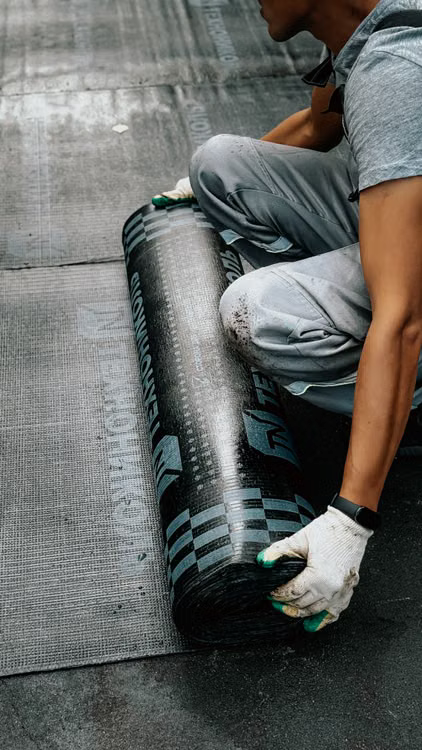
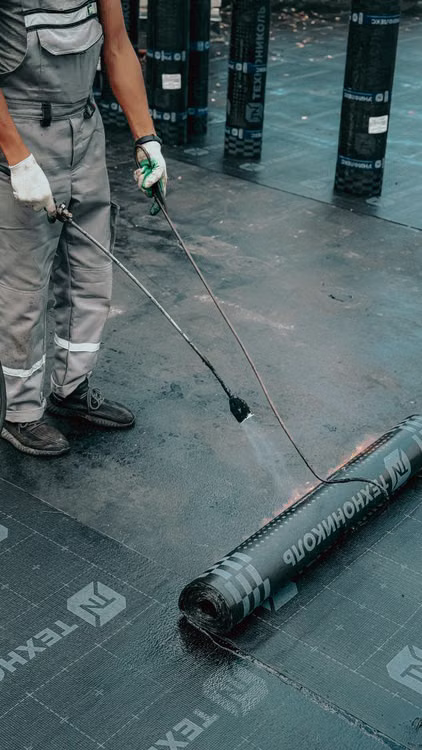
A built-up roof uses several layers of roofing felts or reinforcing fabrics bonded with bitumen.
Deck, insulation, and cover board
The deck provides the foundation. Insulation controls heat flow, while a cover board can improve resistance to impacts and foot traffic. The underlying layers deserve careful attention. A new surface cannot correct wet insulation, a damaged deck, or an unstable substrate. A qualified roofing contractor should evaluate these conditions before work begins.
Bitumen and reinforcing plies
Bitumen binds the reinforcing plies into a substantial membrane. Materials may include asphalt-based components, fiberglass, polyester, or a combination. The surface may receive granules, gravel, coatings, or another protective finish.
Why Does Layered Construction Matter?
The main advantage of built-up roofing is redundancy. Multiple layers provide added material between the building and the elements.
The added thickness can also provide useful resistance to routine foot traffic and minor impacts. That matters on buildings where technicians regularly access HVAC units, drains, vents, and other rooftop equipment.
How Does This Roofing System Perform in Florida?
Florida roofs face intense sun, high temperatures, heavy rainfall, humidity, and severe weather. These conditions can accelerate deterioration when drainage, flashing, or surface protection are neglected. A properly specified layered system can provide dependable waterproofing, but it must match the building and its exposure.
Drainage deserves particular attention. Heavy rainfall can expose weaknesses in low-slope roofs when drains or scuppers cannot move water efficiently. Ponding water can place prolonged stress on roofing materials and increase deterioration around seams, penetrations, and edges.
Heat also increases the value of a well-maintained surface. Suitable reflective surfacing can reduce solar heat absorption, while routine checks can identify blistering, cracks, exposed reinforcement, or other signs of aging before they spread.
Image filename: florida-commercial-roof-drainage
Alt-text: Low-slope commercial roof with drainage equipment under a sunny sky
Image Caption: Effective drainage helps layered roof systems manage heavy Florida rainfall and reduce prolonged ponding.
Where Are These Systems Commonly Used?
Layered systems are commonly associated with low-slope buildings, including warehouses, retail properties, offices, industrial facilities, and structures with large roof areas. These properties often have rooftop equipment and regular service access, making durability and maintainability important.
A property owner considering commercial roofing options should look beyond the material name. The roof deck, insulation, drainage design, building use, maintenance access, expected service life, and budget all influence whether an assembly makes sense.
This approach can work well when an owner wants a substantial membrane assembly, and the building’s structure supports it. It may also be considered during restoration or replacement when an older roof has reached the end of its practical service life.
What Maintenance Does a Built-Up Roof Need?
Routine roof maintenance helps extend the useful life of a layered system by catching small defects before water reaches the insulation or building interior. Maintenance should cover the whole roof, not just the visible surface.
A practical program should include:
- Clearing leaves, debris, and other material from drainage paths.
• Checking drains and scuppers for blockages.
• Inspecting flashing around curbs, walls, vents, and penetrations.
• Looking for blisters, cracks, splits, exposed reinforcement, or damaged surfacing.
• Checking around rooftop equipment for wear or accidental damage.
• Recording changes so developing problems can be compared over time.
A detailed roof inspection can establish a baseline for an aging roof or investigate changes noticed by building staff. It can also be useful after severe weather, major rooftop work, or reports of interior moisture.
When Should a Built-Up Roof Be Repaired?
Roof repair makes sense when damage is localized, and the surrounding assembly remains serviceable. Examples include isolated flashing failures, small surface defects, limited membrane damage, or problems around individual penetrations.
The key is determining whether the defect is local or evidence of a wider failure. Repeated leaks, widespread blistering, saturated insulation, extensive surface deterioration, or recurring repairs can indicate that patching is no longer the best long-term solution.
Repairs should address the source rather than hide the symptom. Interior staining may appear several feet from the actual entry point because water can travel through roofing layers before reaching a ceiling. Finding the entry point requires a careful assessment of the assembly.
When Is Replacement a Better Option?
Roof replacement becomes more appropriate when deterioration is widespread, the underlying assembly is compromised, or continued repairs no longer provide dependable value. An aging roof can accumulate many small defects, making individual repairs increasingly difficult to track.
Replacement planning should consider insulation condition, drainage, deck integrity, rooftop equipment, code requirements, access needs, and the building’s future use.
Other systems may also deserve consideration. TPO roofing can provide a reflective single-ply option for many low-slope buildings. EPDM roofing offers a flexible rubber membrane system, while metal roofing can suit properties where durability and long service life are priorities. The best choice depends on the building, its exposure, and the owner’s long-term goals.
Can a Built-Up Roof Be Coated?
Roof coatings may be considered when an existing roof remains structurally sound, and the surface is suitable for restoration. A coating can add a protective layer, improve weather resistance, and potentially extend useful service life.
However, coating is not a solution for every roof. Wet insulation, extensive deterioration, structural problems, or severe membrane damage should be evaluated first. The coating must also be compatible with the existing surface and applied at the required thickness over properly prepared material.
Silicone roof coating and aluminum roof coatings are two options property owners may encounter when discussing restoration. Product selection depends on the existing roof, exposure, project objectives, and manufacturer requirements.
What Should Property Owners Look For in a Contractor?
Choosing an experienced contractor should involve more than comparing the lowest proposal. Owners should look for relevant commercial experience, appropriate manufacturer credentials, clear project documentation, and a process for handling inspections, repairs, installation, and follow-up service.
Rhino Commercial Roofing is a family-owned company with more than 50 years of combined experience. It is a BBB-accredited business and has certified installers for Johns Manville, Versico, MuleHide, and American WeatherStar. Rhino also provides access to No Dollar Limit warranty coverage through its MuleHide certification.
The company serves commercial properties across Florida and offers installation, repair, replacement, maintenance, tear-offs, emergency roofing, roof coatings, and retrofit solutions. This broad service capability can help when a property needs an assessment before the owner commits to a specific roofing approach. A multi-layer roof remains relevant because it provides a substantial waterproofing assembly for many low-slope buildings. Its performance depends on more than the materials. Sound design, careful installation, effective drainage, detailed flashing, and consistent maintenance all contribute to long-term performance.
For an owner deciding between restoration and replacement, the first step is understanding the condition of the existing roof. A professional assessment can reveal whether localized work is enough or whether a broader project makes better financial and operational sense.
Rhino Commercial Roofing can help property owners evaluate their options. Learn about the company’s experience, explore its roofing services, or contact the roofing team to discuss your building.