
Protecting a business property in Florida requires more than choosing a roof material. Florida commercial roofing has to account for persistent sun, heavy rain, wind exposure, rooftop equipment, drainage, and the maintenance demands of the selected system. Our Florida service areas cover multiple markets across the state, which makes regional weather exposure an important part of every commercial roof planning discussion.
A property owner searching for a roofing contractor in Fort Lauderdale may have a different building, roof assembly, and maintenance history from an owner in Tampa or Orlando. The practical goal is to connect roof condition and building use with appropriate materials, drainage, inspections, repair timing, coatings or retrofits where suitable, and replacement when the existing assembly can no longer support the needed work.
Heat and Sun Exposure
Florida roofs receive substantial solar exposure, and the roof surface can become much hotter than the surrounding air. Material color and solar-reflective properties affect how much solar energy the roof absorbs. The US Environmental Protection Agency explains that cool roofs reflect more sunlight and absorb less solar energy than conventional roofs. Light-colored membranes and reflective coatings can therefore be useful design options on suitable buildings.
Reflectivity should still be treated as one roof characteristic rather than a guarantee of a specific indoor temperature or energy saving. Insulation, air leakage, HVAC efficiency, roof area, occupancy, and equipment loads affect building performance. Sun exposure also affects sealants, coatings, membranes, and metal finishes over time, which is another reason inspection and maintenance remain important even on reflective roof systems.
Heat also changes how roof components move. Metal panels expand and contract, membrane assemblies respond to temperature cycles, and sealants or flashing materials can age under repeated exposure. Good detailing is intended to accommodate normal movement, but maintenance should watch for openings, displaced components, surface deterioration, or coating wear that develops over time. Roof access should remain controlled so avoidable foot-traffic damage does not add to weather-related stress.
Heavy Rain, Drainage, and Moisture
Low-slope commercial roofs depend on drains, scuppers, gutters where used, and properly shaped roof areas to move rainfall away. Debris around drains can slow water removal, while depressions or other drainage defects can contribute to recurring ponding. Owners should distinguish maintenance issues such as blocked drainage from design or structural conditions that require a more substantial correction.
A call for roof leak repair in Sarasota should therefore look beyond the interior symptom. Water may enter at a seam, flashing, penetration, edge, drain detail, puncture, or deteriorated area and then travel before it becomes visible inside. NRCA material on key considerations for roof drainage emphasizes the importance of primary and backup drainage for controlling roof water and preventing harmful accumulation.
Storms and Wind Exposure
Severe weather adds another layer of roof risk. Wind can stress edges, corners, flashings, rooftop equipment, panels, and membrane attachment, while wind-driven rain can exploit openings that might remain unnoticed during ordinary weather. NOAA notes that tropical cyclones can produce multiple hazards, including high winds and heavy rainfall. After a significant event, an appropriate roof check can help identify visible changes before normal operations and weather hide the evidence.
NOAA also explains the broad impacts of hurricanes and tropical cyclones. For commercial owners, preparedness should include keeping roof access controlled, knowing where drains and vulnerable details are located, documenting pre-storm conditions when practical, and arranging post-storm evaluation when the property may have been affected. Any inspection must be performed safely and only when conditions permit.
Post-storm observations should be compared with pre-existing conditions whenever records are available. Photos and repair histories can help distinguish a newly displaced flashing or puncture from an older condition that was already being monitored. If water enters the building, the interior location should be documented, but the roof investigation should not assume the source is directly above the stain because water can move within the assembly before becoming visible.
Matching Roofing Systems and Maintenance to Florida Conditions
System choice should bring these exposures together. TPO, EPDM, PVC, built-up roofing, metal systems, and compatible coatings all have different construction, detailing, and maintenance requirements. Commercial low-slope roofs can therefore use several distinct system families rather than one universal material category. The right option depends on the building, roof slope, deck, existing assembly, use, drainage, attachment requirements, and project objectives.
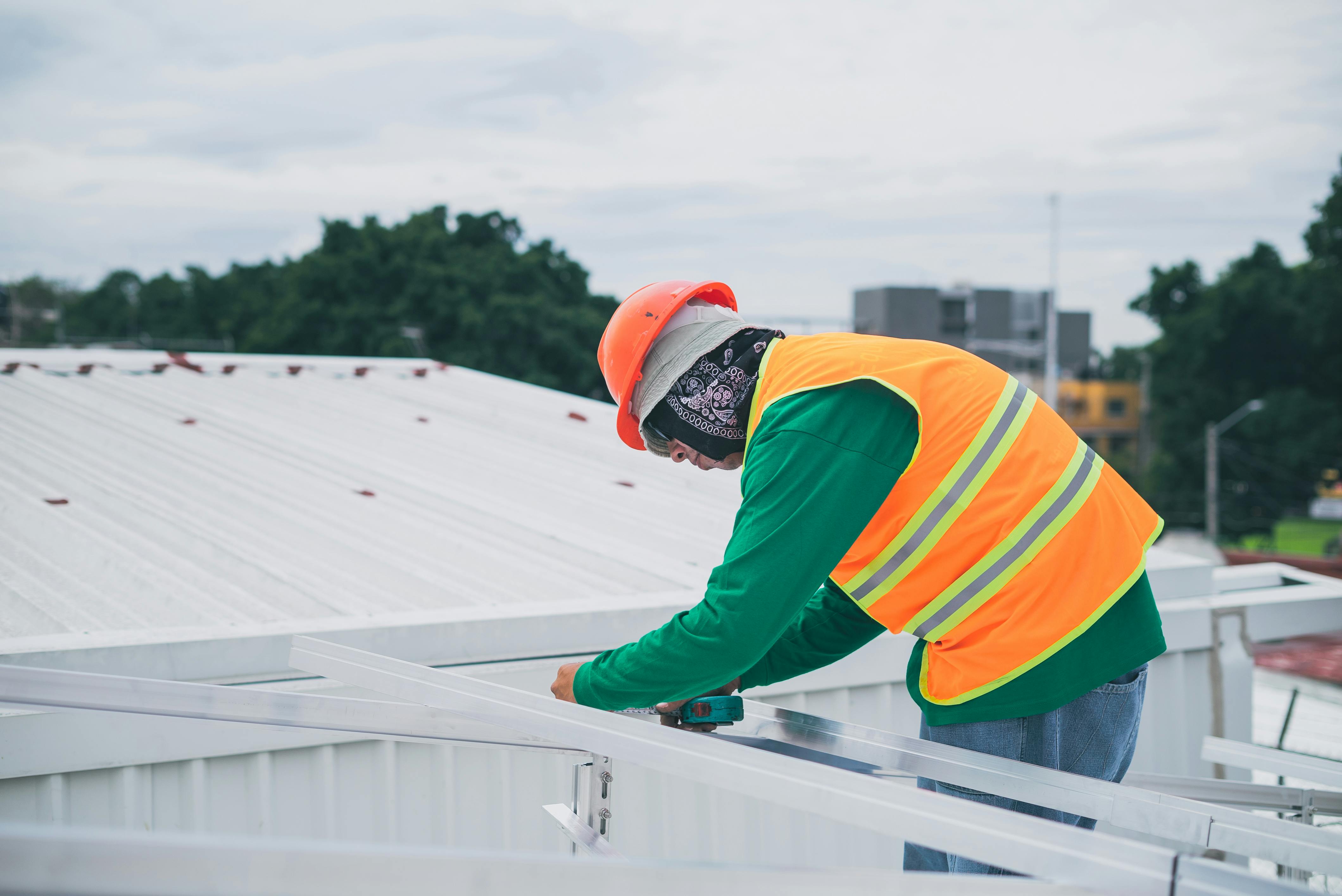
Maintenance should then be matched to the system that is installed. Membrane seams, metal panel joints, flashings, penetrations, roof edges, drains, coatings, and previous repair areas do not weather in exactly the same way. Property owners benefit from keeping records of inspections and work performed so new observations can be compared with earlier conditions rather than evaluated without context.
The maintenance plan should also reflect roof access and building operations. Restaurants, warehouses, offices, retail properties, and facilities with frequent rooftop mechanical work may place different demands on the roof. Walk pads, equipment clearances, grease or chemical exposure, service routes, and the frequency of contractor access can all affect detailing and inspection priorities. These building-specific conditions should be considered alongside Florida weather when the roof strategy is reviewed.
Protecting the Property Over the Long Term
Owners comparing commercial roofing in Fort Lauderdale should look for a process that starts with the actual building and roof condition. Our roof maintenance services can support routine attention to a commercial roof, while repair, coatings, retrofits, and replacement remain separate options when conditions call for them. The objective is to use the appropriate level of work rather than force every roof into the same solution.
The same is true for roof repair in St. Petersburg. We provide commercial roofing services across Florida and work with multiple low-slope, metal, coating, maintenance, inspection, repair, and retrofit solutions. Property owners who want to review the options available for an existing building can explore our commercial roofing services and speak with our team about the roof conditions, weather exposure, and long-term property needs that should guide the next step.