
A commercial roof needs roof repair when damage is localized and manageable, and roof replacement when structural integrity or performance is compromised across large areas. Knowing the difference helps prevent unnecessary costs and operational risks.
Commercial roofing systems are designed for durability, but exposure to weather, temperature fluctuations, and aging materials gradually reduces performance. Identifying early warning signs allows building owners to act before minor issues escalate into major failures.
1. Quick Answer: When Should You Repair vs. Replace a Commercial Roof?
Repair is suitable when:
- Damage is limited to small sections
- The roofing system is under 15–20 years old
- Leaks are isolated and infrequent
Replacement is required when:
- Damage is widespread
- The roof has exceeded its service life
- Structural components or insulation are failing
This distinction helps prioritize cost-effective and technically appropriate solutions.
2. What Are the Most Common Signs of Roof Damage?
Commercial roofs show clear warning signs before failure occurs. These indicators should not be ignored.
- Persistent Leaks and Water Intrusion
Recurring leaks indicate compromised waterproofing.
Water stains, pooling, or interior drips often signal the need for roof leak repair. If leaks occur in multiple areas, it may point to system-wide deterioration rather than isolated damage.
Key indicators:
- Ceiling discoloration
- Mold or mildew growth
- Water accumulation after rainfall
- Membrane Damage or Surface Deterioration
Membrane damage reduces a roof’s ability to resist moisture and UV exposure.
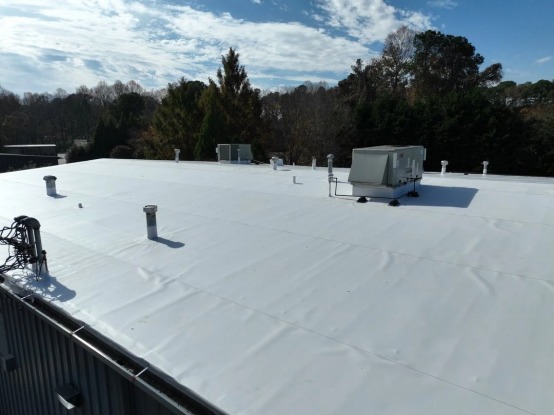
Flat and low-slope systems, especially flat roofing, are vulnerable to punctures, cracks, and seam separation. These issues allow water penetration and accelerate internal damage.
Look for:
- Blistering or bubbling
- Tears or punctures
- Open seams
- Ponding Water That Does Not Drain
Standing water lasting more than 48 hours indicates drainage failure.
Poor drainage increases structural load and accelerates material breakdown. Over time, ponding water weakens the roofing system and contributes to leaks.
Common causes include:
- Improper slope design
- Blocked drainage systems
- Structural sagging
- Insulation Failure and Energy Loss
Insulation failure reduces thermal efficiency and increases operating costs.
Wet or compressed insulation loses its ability to regulate temperature. This often results in higher energy bills and inconsistent indoor conditions.
Warning signs:
- Sudden increase in energy usage
- Uneven indoor temperatures
- Moisture detected beneath roofing layers
3. How Age Impacts Commercial Roofing Performance
A commercial roof typically lasts 20–30 years, depending on materials and maintenance.
As systems age, they become more susceptible to cracking, shrinkage, and structural fatigue. Even with regular roof inspection service in Miami, older roofs often require replacement due to cumulative wear.
General lifespan by material:
| Roofing Type | Average Lifespan |
| Flat Roofing | 20–25 years |
| Metal Roofing | 30–45 years |
| Built-Up Roofing | 20–30 years |
Age alone does not determine replacement, but it significantly influences repair viability.
4. When Is Roof Repair No Longer Enough?
Roof repair is no longer sufficient when damage affects multiple system layers.
If moisture penetrates insulation and decking, surface repairs will not resolve underlying issues. In these cases, partial fixes often lead to repeated failures.
Replacement is recommended when:
- Repairs exceed 25–30% of total roof area
- Structural components are compromised
- Recurring issues persist despite maintenance
5. What Role Does Regular Inspection Play?
A roof inspection service identifies damage before it becomes critical.
Routine inspections, typically conducted twice a year and after major storms, help detect early-stage issues such as minor leaks, membrane wear, and drainage problems.
Standard inspection process includes:
- Surface condition evaluation
- Drainage system assessment
- Moisture detection testing
- Structural integrity review
Early detection reduces repair costs and extends the life of the roofing system.
6. Cost Comparison: Repair vs. Replacement
Understanding cost differences helps guide decision-making.
| Factor | Roof Repair | Roof Replacement |
| Initial Cost | Lower | Higher |
| Long-Term Cost | Can increase with repetition | More predictable |
| Lifespan Extension | Short-term | Long-term |
| Disruption Level | Minimal | Moderate |
While repair may seem cost-effective initially, repeated fixes often exceed the cost of a full replacement over time.
Make a Timely, Informed Decision
Timely action prevents minor issues from becoming structural failures.
Building owners should evaluate visible damage, system age, and inspection results before deciding between repair and replacement. Delaying action increases the risk of operational disruption and higher repair costs.
Ready to Address Your Commercial Roofing Needs?
If your property shows signs of damage, timely action is critical. Rhino Commercial Roofing provides expert commercial roofing in Tampa, reliable roof leak repair in Tampa, and efficient roof replacement solutions. Schedule a professional roof inspection service in Ft. Lauderdale today to assess your system, prevent further damage, and ensure long-term performance with practical, cost-effective roofing solutions. Reach out now.