
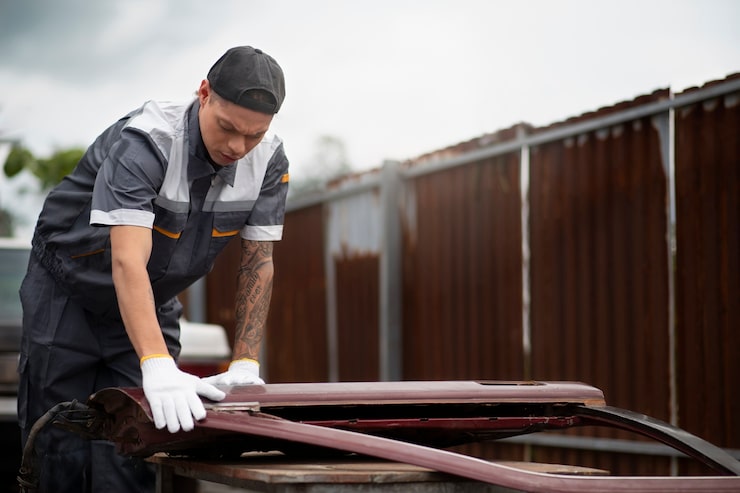
Severe Florida weather can leave commercial roofs with damage that is easy to miss from the ground. Heavy rain can expose drainage problems, strong winds can loosen flashing and edge details, and flying debris can puncture membranes without leaving an obvious mark inside the building.
A post-storm roof inspection helps property managers identify these problems before they become expensive failures. The inspection should cover the roof surface, drainage system, membrane, seams, flashing, penetrations, and areas around rooftop equipment.
For commercial properties, timing matters. A small opening created during a storm can allow water beneath the roofing system long before a ceiling stain appears. This guide explains what property managers should look for after severe weather and when professional evaluation is necessary.
What should a property manager check after severe Florida weather?
A post-storm roof check should look for visible damage, standing water, blocked drains, damaged flashing, loose materials, membrane punctures, seam problems, and signs of moisture intrusion. Areas that cannot be safely evaluated from the ground require professional assessment.
Start with a visual inspection from a safe location. Look for displaced materials, debris, unusual water accumulation, damaged rooftop equipment, and changes around roof edges. Do not assume the roof is undamaged because there is no interior leak. Commercial roofing systems can absorb or redirect water beneath the surface, allowing damage to develop before it becomes visible indoors.
Property managers should document anything unusual with photographs and notes. Record the date of the storm, areas affected, and any immediate concerns. This information can become useful when discussing repairs, maintenance, or insurance documentation.
How can heavy rain affect a commercial roof?
Heavy rain can overwhelm drainage systems, create ponding water, expose weak seams, and increase the chance of water entering damaged flashing or penetrations. Drainage performance should therefore be one of the first priorities after a major storm. Flat and low-slope roofs depend heavily on functioning drains, scuppers, gutters, and downspouts. Leaves, branches, trash, and storm debris can block these components and prevent water from leaving the roof efficiently.
Ponding water deserves particular attention. Water that remains on the roof after rainfall can place additional weight on the structure and contribute to membrane deterioration over time. A property manager should also check whether water has collected around HVAC units, curbs, skylights, vents, and other penetrations. These areas interrupt the continuous roof surface and require properly maintained flashing and seals.
What wind damage should property managers look for?
Wind can loosen edge materials, flashing, membrane sections, rooftop equipment components, and other exposed elements. Even when the main roof surface appears intact, perimeter areas can reveal signs of wind-related stress.
Roof edges deserve close attention because wind pressure can be greater around corners and perimeters. Look for lifted materials, loose metal, displaced flashing, exposed fasteners, or components that appear different from their original position. Do not attempt to walk onto an unsafe roof after severe weather. Strong winds may leave unstable materials behind, and wet surfaces create additional slip hazards.
A professional commercial roofing contractor can evaluate areas that are difficult to inspect safely. This is especially important when the building has a large roof area, multiple levels, extensive equipment, or a complicated perimeter. The goal is not simply to find obvious damage. The inspection should determine whether the roofing assembly remains secure and watertight.
How should roof membranes and seams be evaluated after a storm?
Membrane inspections should look for punctures, cuts, lifted sections, surface deterioration, and areas where the membrane has separated from underlying materials. Seams should also be checked for separation, weak points, or other visible defects. Single-ply systems such as TPO roofing and EPDM roofing depend on continuous membranes and properly detailed seams. Storm debris, foot traffic, equipment activity, and wind can create damage that may not be immediately obvious.
Heat-welded TPO seams require particular attention because their integrity is central to water resistance. Inspectors should look for visible separation, damaged welds, lifting, and signs that water may have entered beneath the membrane. EPDM systems also require careful examination of seams, flashing, penetrations, and transitions. The exact inspection process depends on the roofing assembly and its installation. Older systems deserve additional scrutiny. Repeated exposure to Florida’s heat, ultraviolet radiation, humidity, and storms can gradually reduce material performance.
Why are flashing and roof penetrations important after storms?
Flashing and penetrations are common areas of concern because they create transitions where water must move around or across different components. Damaged flashing, deteriorated sealants, and loose details can provide pathways for water intrusion. Commercial roofs contain many penetrations. HVAC equipment, vents, pipes, skylights, electrical components, and curbs can interrupt the roof membrane.
After severe weather, inspect these areas for cracked sealants, loose flashing, membrane separation, corrosion, and visible gaps. Water stains around rooftop equipment or inside the building can provide additional clues. A qualified inspector should also examine transitions around parapet walls and roof edges. Damage in these areas can be difficult to recognize without getting close to the affected detail.
This is where a thorough roof inspection service provides more value than a quick visual check. The objective is to understand how the entire roofing system is performing rather than simply locating the first visible problem.
When does storm damage require roof repair?
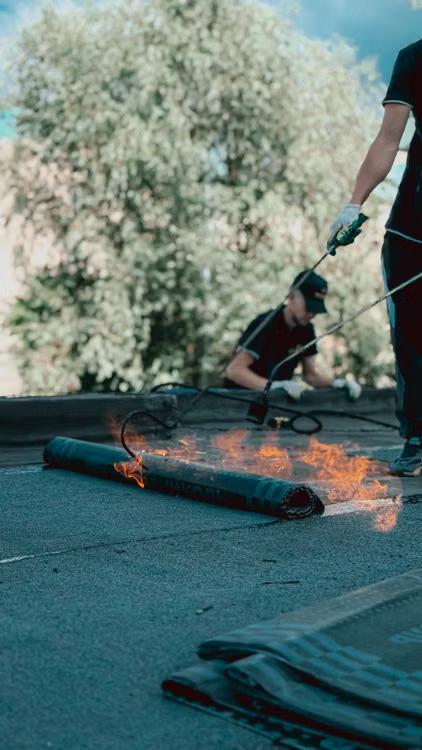
Storm damage requires roof repair when the inspection identifies defects that could allow water intrusion or compromise the roofing system. Common examples include punctured membranes, separated seams, damaged flashing, loose components, and localized deterioration.
Not every storm requires major work. Some problems can be corrected before they spread, particularly when they are identified quickly.
For example, a small membrane puncture may be relatively straightforward to address. Left unattended, repeated rainfall can allow moisture to move beneath the surface and damage insulation or other components.
The same principle applies to flashing. A small separation may appear insignificant, but wind-driven rain can exploit the opening during subsequent storms.
Property managers should avoid temporary fixes that conceal the problem without addressing its cause. A professional evaluation can determine whether the appropriate response is localized repair, broader restoration, or eventual replacement.
When is roof leak repair an emergency?
Roof leak repair should receive prompt attention when water is actively entering the building, especially around electrical equipment, valuable inventory, occupied areas, or critical business operations. Interior signs can include ceiling stains, wet insulation, dripping water, damaged drywall, unusual odors, or visible moisture around roof penetrations.
A leak does not always originate directly above the interior stain. Water can travel along roofing layers, insulation, structural components, or interior surfaces before becoming visible. That makes tracing the source important. Simply sealing the location where water appears inside may not solve the underlying problem. Rhino Commercial Roofing offers 24-hour emergency service, giving property managers an option when severe weather creates an urgent roofing problem.
How can property managers protect their commercial roofs before the next storm?
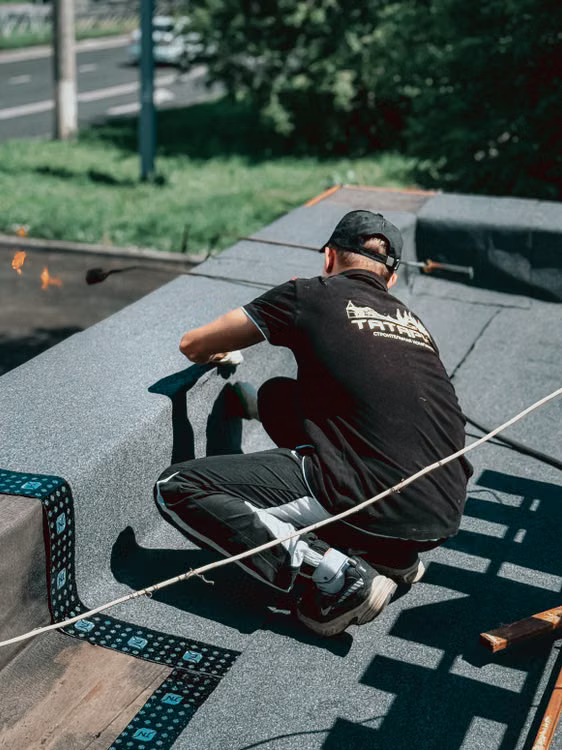
The best protection begins before severe weather arrives. Property managers should keep drainage systems clear, address known defects, inspect flashing and perimeter details, secure rooftop equipment, and maintain current roof condition records. Do not wait for a major storm to discover that a drain is blocked or a flashing detail has deteriorated.
Rhino Commercial Roofing has more than 50 years of family-owned experience and provides commercial roofing solutions throughout Florida. The company is BBB-accredited and has certified installers associated with Johns Manville, Versico, MuleHide, and American WeatherStar. Rhino also holds MuleHide NDL warranty certification C052315793.
If your building has recently experienced severe weather, start with a professional evaluation rather than waiting for an interior leak to reveal the damage.
Learn more about Rhino Commercial Roofing and its experience serving Florida businesses. Explore commercial roofing services to see repair, maintenance, coating, retrofit, and roofing-system options. Schedule a roof inspection before a small storm-related problem becomes a larger commercial property issue.