
Single-ply membrane has become the default on low-slope commercial buildings in hot climates, and that did not happen by accident. The material handles heat, standing water, and rooftop chemical exposure better than most alternatives at the price. TPO roofing in Florida now covers a large share of the warehouses, retail units, and light industrial buildings we work on.
This guide covers three things: how the assembly is put together, what it does well here specifically, and which installation decisions determine whether it lasts. Owners looking at flat roofing in Tampa usually have this system on the shortlist already. Our TPO installation work starts with the same three questions every time.
How a TPO Roof Assembly Goes Together
A membrane roof is a stack rather than a single product. Each layer does a specific job, and understanding the order explains why certain failures happen where they do.
Deck, insulation, and cover board
The structural deck carries the load, whether that is steel, concrete, or wood. Insulation sits above it and helps keep heat out, which is also why saturated insulation is such a serious problem. A cover board goes over the insulation to give the membrane a firm, uniform surface and to resist damage from foot traffic above.
Membrane attachment and heat-welded seams
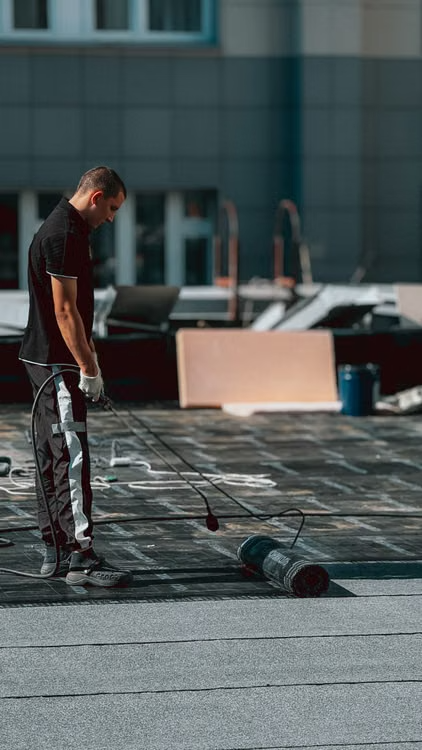
The membrane itself is attached mechanically, adhered, or ballasted, depending on the building and the wind exposure. Individual sheets overlap at the laps, and those laps are heat-welded rather than glued or taped. That weld fuses the sheets into one continuous surface, which is the single biggest reason the system resists water the way it does.
SPRI publishes technical material on single-ply construction for owners who want the specifications behind each of those layers. The practical takeaway is that the sheet rarely fails in the open field. Problems start at the edges, the seams, and the places where something passes through.
Performance Traits That Suit a Hot, Wet Climate
Florida applies a specific combination of stresses, and membrane handles that combination unusually well: sustained UV, high humidity, drainage that struggles under heavy rainfall, and rooftop equipment leaking oils and refrigerants onto the surface. A professional roofing contractor in Ft. Lauderdale is weighing all four when specifying a system.
Reflectivity and cooling demand
A light-colored membrane reflects a large share of incoming solar radiation rather than absorbing it. That lowers the rooftop surface temperature substantially, which reduces the heat entering the building and the load on cooling equipment. Research from the LBNL Heat Island Group covers the physics behind reflective surfaces in detail.
The membrane also tolerates standing water, which matters more here than owners expect. Drainage settles over time, equipment gets added, and ponding appears on roofs that drained perfectly at handover. A system that stays watertight under that water is doing real work.
Installation Factors That Decide Long-Term Results
Two identical membranes on two identical buildings can perform a decade apart. The difference is almost always installation rather than material.
Substrate condition and fastening pattern
A membrane laid over a damaged base layer inherits every problem underneath it. Wet insulation left in place, an uneven cover board, or a deck with rusted fasteners will all show through eventually. Fastening patterns also have to match the wind zone, with heavier attachment at perimeters and corners where wind pushes hardest to lift the roof.
Detailing at penetrations and perimeters
This is where roofs actually fail. Every curb, pipe, drain, and equipment support needs a detail that accommodates movement and sheds water correctly. The WBDG roofing systems guide sets out design principles for these transitions, and the difference between a good detail and a rushed one only becomes visible years later.
Where a Single-Ply System Earns Its Place
This system suits low-slope buildings with dense rooftop equipment, imperfect drainage, and owners who want a roof that reflects heat from day one. It is not the answer everywhere, and we say so when a building calls for something else. Owners weighing roof replacement in Miami against restoration often find membrane is the sensible landing point once the existing assembly has been assessed.
Retrofit is worth raising too, because it is frequently overlooked. Where the existing roof is dry and structurally sound, a TPO retrofit can upgrade the building without a full tear-off. That approach applies equally to roof installation in St. Petersburg and across the other markets we cover.
Rhino Commercial Roofing is a family-owned, BBB-accredited contractor working exclusively on commercial roofs across Florida, with over fifty years of combined experience and certified installer status with Johns Manville, Versico, MuleHide, and American WeatherStar, including access to No Dollar Limit (NDL) warranty coverage. Explore your options with our team and we will tell you whether membrane is the right fit for your building.