
Every roof reaches a point where patching stops being the sensible answer. The difficulty for most owners is spotting that point before a wet season makes the decision for them. When we assess a building for roof replacement in Tampa, we are checking for a handful of specific conditions rather than forming a general impression.
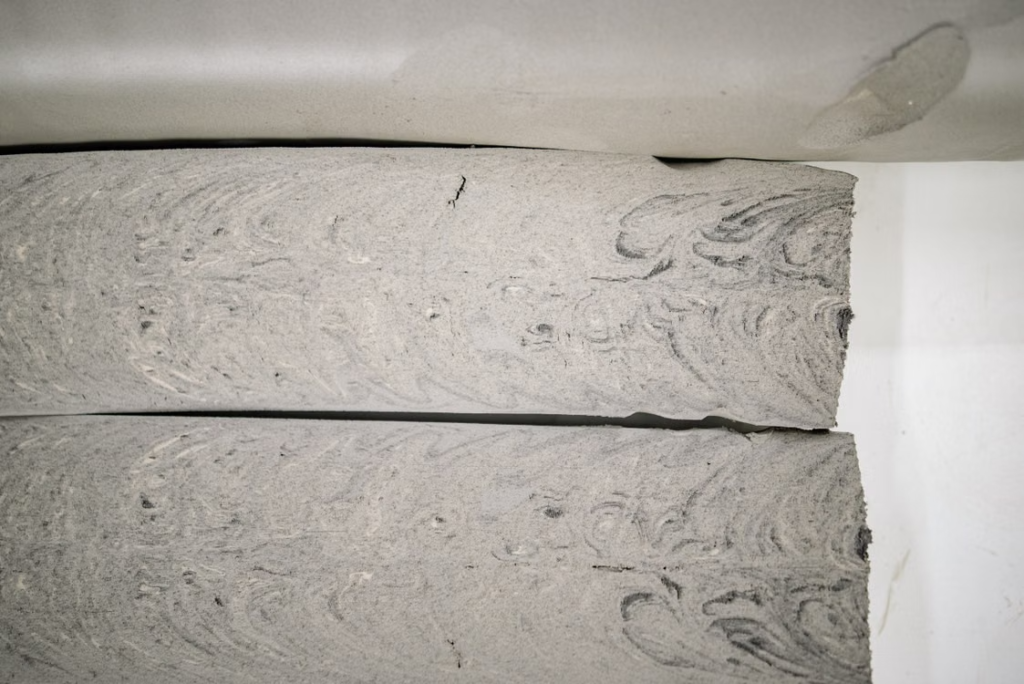
Some of those conditions are obvious once you know to look. Others sit beneath the surface and only appear in a core sample. We have arrived for what an owner assumed was straightforward roof leak repair in Miami and found an assembly well past patching. In those cases, a complete tear-off is the only work that genuinely solves the problem.
Age and the End of a System Service Life
Age on its own does not condemn a roof, but it changes what every other finding means. A blister on a four-year-old membrane is a defect worth investigating. The same blister on a twenty-two-year-old membrane is usually one symptom among many.
Expected service life by system type
Different assemblies age at different rates, and Florida compresses all of them. Sustained UV exposure, daily thermal cycling, and long humid periods work on materials harder than a temperate climate does. The WBDG roofing systems guide publishes service life expectations by assembly type, which gives owners a neutral benchmark to measure their own roof against.
We treat those ranges as a starting point rather than a verdict. A well-maintained system often runs past its expected range, and a neglected one rarely reaches it. What matters is where the roof sits relative to that range once its actual condition is on the table.
Maintenance history changes the calculation more than most owners expect. Two identical roofs installed the same year can sit a decade apart in condition, depending on whether drains were cleared and details renewed. We have replaced fifteen-year-old systems that were never touched and left twenty-five-year-old systems in service because somebody looked after them.
Moisture Trapped Inside the Roof Assembly
This condition ends more commercial roofs than any other, and it is the one owners are least likely to see coming. Water that gets past the membrane does not stay where it entered. Our roof inspection services in Fort Lauderdale rely on core cuts precisely because the surface gives no reliable indication of what sits below it.
Why wet insulation cannot be dried in place
Insulation is designed to hold air, and once it holds water instead, it does not release it. The membrane above seals the assembly, so no evaporation path exists. Saturated board loses most of its thermal value, gains significant weight, and holds moisture against the deck indefinitely.
Building Science Corporation publishes extensively on how moisture behaves inside building assemblies, and it is a useful reference for owners who want the underlying physics. The practical consequence on a roof is simple enough. A surface repair over saturated insulation seals the problem in rather than solving it.
How saturation spreads beyond the leak point
Water travels along the deck and between insulation joints, often ending up several bays away from the breach. That is why a stain in one office rarely sits underneath the actual hole. By the time three or four bays test wet, the affected area has usually outgrown what a repair can economically cover.
Timing matters here as well. Moisture found in one bay during a spring inspection is a contained repair. The same moisture found in November, after a full wet season has pushed it outward, is frequently a replacement.
Repeated Failures Across Multiple Roof Areas
A single recurring leak is a detail problem. Leaks appearing in unrelated parts of the roof within the same season are a system problem, and that distinction matters more than the number of callouts.
We track where failures occur across a roof rather than simply counting them. Three failures clustered around one curb suggest a single bad detail that can be rebuilt properly. Three failures at opposite corners suggest the membrane, the fasteners, or the original installation is reaching the end of what it can do.
Owners often reach this conclusion before we do. When one building has had four separate contractors patch four separate areas in two years, the pattern is already clear enough.
There is a cost signal buried in this as well. Each callout carries a mobilization charge whether the repair takes an hour or a day, and those charges accumulate quietly. Owners rarely add them up until we set two years of invoices beside a replacement quote.
Storm Damage That Compromises the Whole System
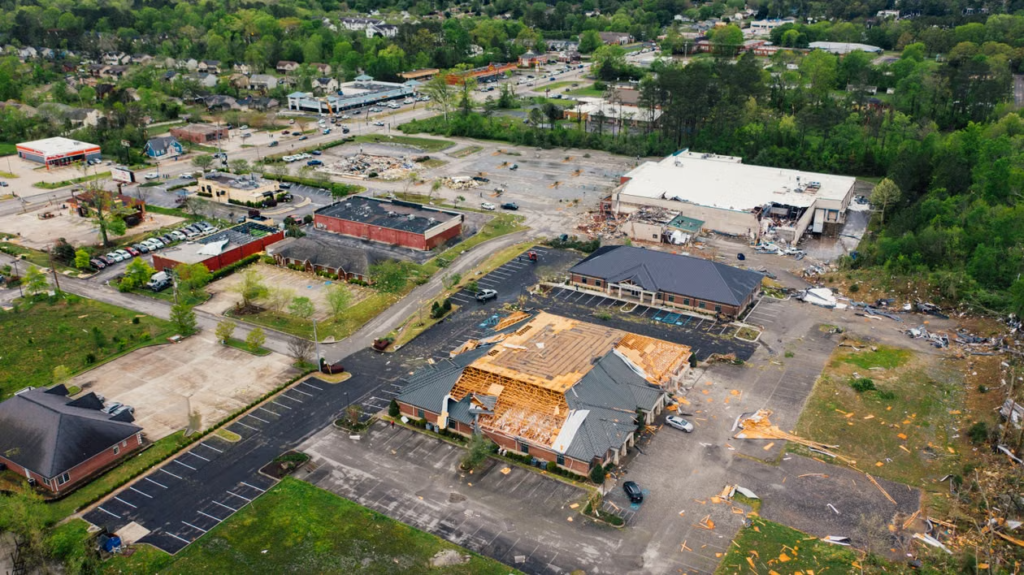
Florida roofs take loads that most of the country never sees. A single severe event can do more damage in an afternoon than a decade of ordinary weather does.
Wind uplift at perimeters and corners
Wind does not press evenly across a roof. Pressure concentrates at corners and along perimeters, which is why those zones carry heavier fastening in the first place. Once uplift exceeds what the attachment can hold, the membrane lifts at the edge, and the failure works inward from there.
Debris impact adds a second problem. Individual punctures are easy to patch, but a roof that has taken widespread impact often carries dozens of small breaches that only surface months later. Severe storm guidance from the National Weather Service helps owners understand the conditions their building is actually exposed to.
Recognizing the Point of Diminishing Returns
None of these conditions arrives with a label attached. They show up as a leak, an energy bill that has crept upward, or a repair quote that seems high for the area involved. A roofing contractor in St. Petersburg should be able to tell you which of these conditions is actually driving the recommendation.
That explanation separates an assessment from a sales pitch. When we recommend roof replacement in Sarasota, the owner receives the core sample results and the failure map that produced it. The same evidence sits on the table for our repair and replacement work, whichever direction it points.
Rhino Commercial Roofers is a family-owned contractor working only on commercial roofs, with over fifty years of combined experience, BBB accreditation, and certified installer status with Johns Manville, Versico, MuleHide, and American WeatherStar. Request an assessment from our team, and we will show you exactly which condition your roof is in.